2026-09-22 ·
7 Signs You Need an Emergency Electrician in NY
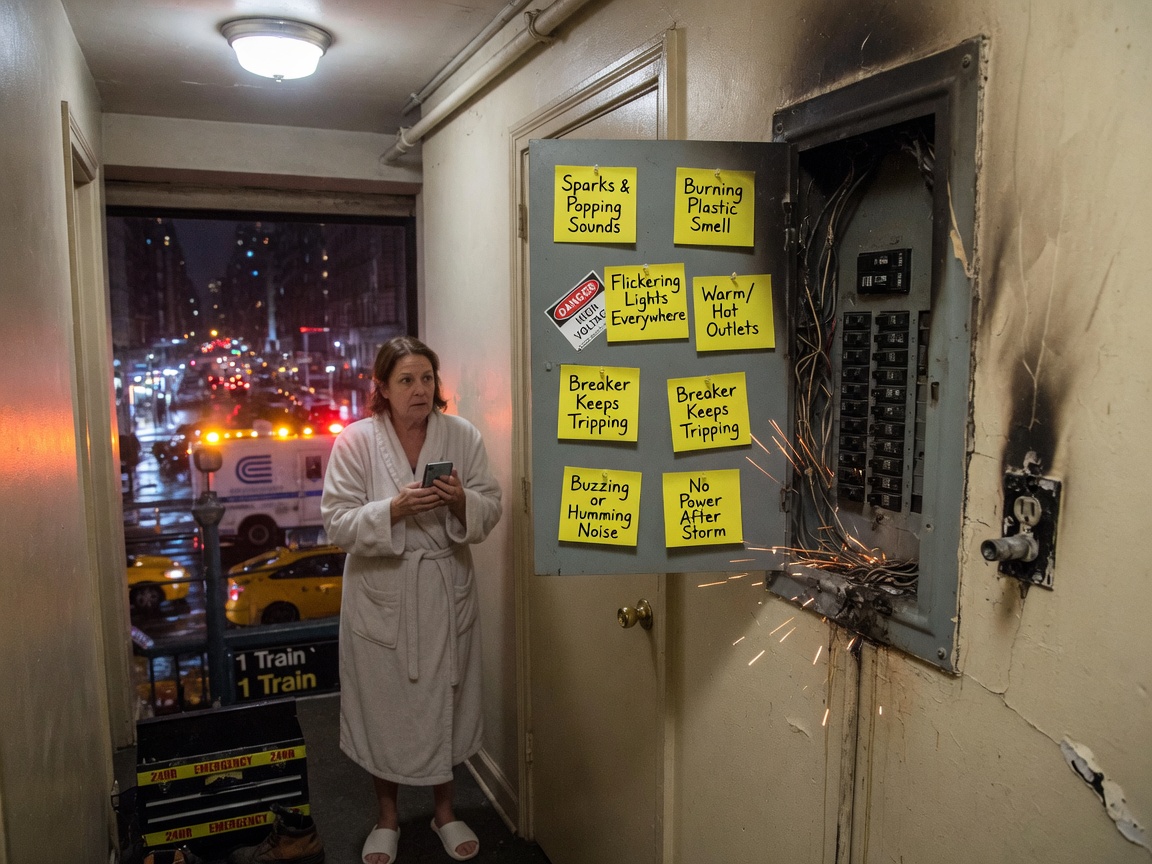
If you spot any of the seven signs below in your New York City home, contact an emergency electrician right away rather than waiting for scheduled service. Pre-war buildings in Manhattan and brownstones in Brooklyn frequently carry outdated knob-and-tube wiring that cannot handle modern loads from air conditioners or EV chargers, while coastal storms in Queens and Staten Island add salt-air corrosion to panels. Acting fast prevents small faults from becoming widespread outages or fire risks in dense urban blocks where power loss affects multiple units.
Frequent Breaker Trips Signal Overloaded Panels
Older electrical panels in 1920s-1940s apartments throughout New York City commonly trip when residents add refrigerators, microwaves, and computers to circuits never designed for them. In neighborhoods like the Bronx and Upper West Side, shared service lines from the street often deliver inconsistent voltage during peak evening hours, pushing breakers past their limits. A single trip might seem minor, yet repeated occurrences point to heat buildup inside the panel that can melt insulation or warp bus bars. Homeowners in Hempstead and North Hempstead see the same pattern after installing high-draw appliances without panel upgrades. Persistent tripping requires immediate assessment because the underlying wiring may already show charring or loose connections hidden behind walls.
Burning Odors or Warm Outlets Indicate Hidden Damage
Plastic or metallic smells near outlets or switches often trace to loose connections in walls of row houses in Brooklyn and Queens where decades of vibration from subways loosen terminals. These early warnings appear most during summer humidity when moisture accelerates oxidation on copper. Warm plates that stay hot after devices unplug point to arcing that can ignite surrounding wood framing common in pre-1960 construction. Staten Island homes near the water face extra salt exposure that speeds corrosion on ground wires. Ignoring the smell allows the fault to migrate to adjacent circuits, creating larger failures during the next Nor'easter.
Flickering Lights During Normal Use
Lights that dim or pulse without storms usually stem from loose neutral connections in service entrances of Manhattan co-ops and older Bronx multifamily buildings. Seasonal temperature swings expand and contract aluminum wiring splices installed in the 1970s, creating intermittent contact. The pattern shows most clearly on upper floors where longer runs amplify voltage drop. Residents in Yonkers and New Rochelle report the same symptom when tree limbs contact overhead lines after heavy snow. Persistent flickering risks damaging sensitive electronics and signals the need for an on-site inspection before a full outage occurs.
Sparks or Buzzing from Switches and Outlets
Visible sparks when plugging in appliances or audible buzzing inside walls appear regularly in aging stock across New York City because original two-prong receptacles lack proper grounding. In Bushwick and Astoria, DIY additions often leave backstabbed connections that loosen over time. Salt air in Rockaway and Coney Island accelerates pitting on contact points, making arcing more likely during high-load periods. Each spark generates heat that can travel along knob-and-tube runs still present in many landmarked properties. Immediate shutdown of the affected circuit prevents escalation to an electrical fire.
Sudden Power Loss After Storms or High Winds
Post-storm outages in New York City frequently leave individual homes dark while neighbors retain power, pointing to tripped main breakers or damaged service masts on rooftops. Hurricane remnants and nor'easters bring wind-driven rain that enters outdoor panels in Queens and Staten Island, shorting components. Tree contact in suburban pockets like Brookhaven and Islip adds another failure mode. When power returns to the street but not the house, the issue lies inside the meter or panel rather than utility infrastructure. This scenario demands 24/7 emergency response to restore service safely before food spoils or security systems fail.
Outlets That Stop Working on One Wall
Dead receptacles along a single wall often result from a tripped or failed branch circuit breaker in older fuse boxes still found in parts of Harlem and Bedford-Stuyvesant. Shared neutrals in multi-unit buildings can mask the problem until multiple outlets fail together. In high-rise apartments, overloaded subpanels on each floor contribute to the same symptom. Testing with a known working device confirms whether the issue is local or panel-wide. Continued use of the remaining live outlets risks overloading the intact circuits and creating new hazards.
How to Respond When Signs Appear
Document the exact locations and timing of each symptom, then shut off power to affected areas at the breaker if safe to do so. Call for 24/7 emergency response serving New York City & Surrounding Areas so a technician can arrive while the fault is still active and easier to trace. Avoid resetting breakers repeatedly, as this masks the root cause. For related concerns, review Electrical Fire Warning Signs Every NY Homeowner or What Causes Sudden Power Loss in Your Home?. When outlets are involved, see guidance in How to Handle an Electrical Outlet Emergency in New York. Prompt action protects both the property and neighboring units in dense city blocks.