
2026-09-22 ·
Why Your Circuit Breaker Keeps Tripping
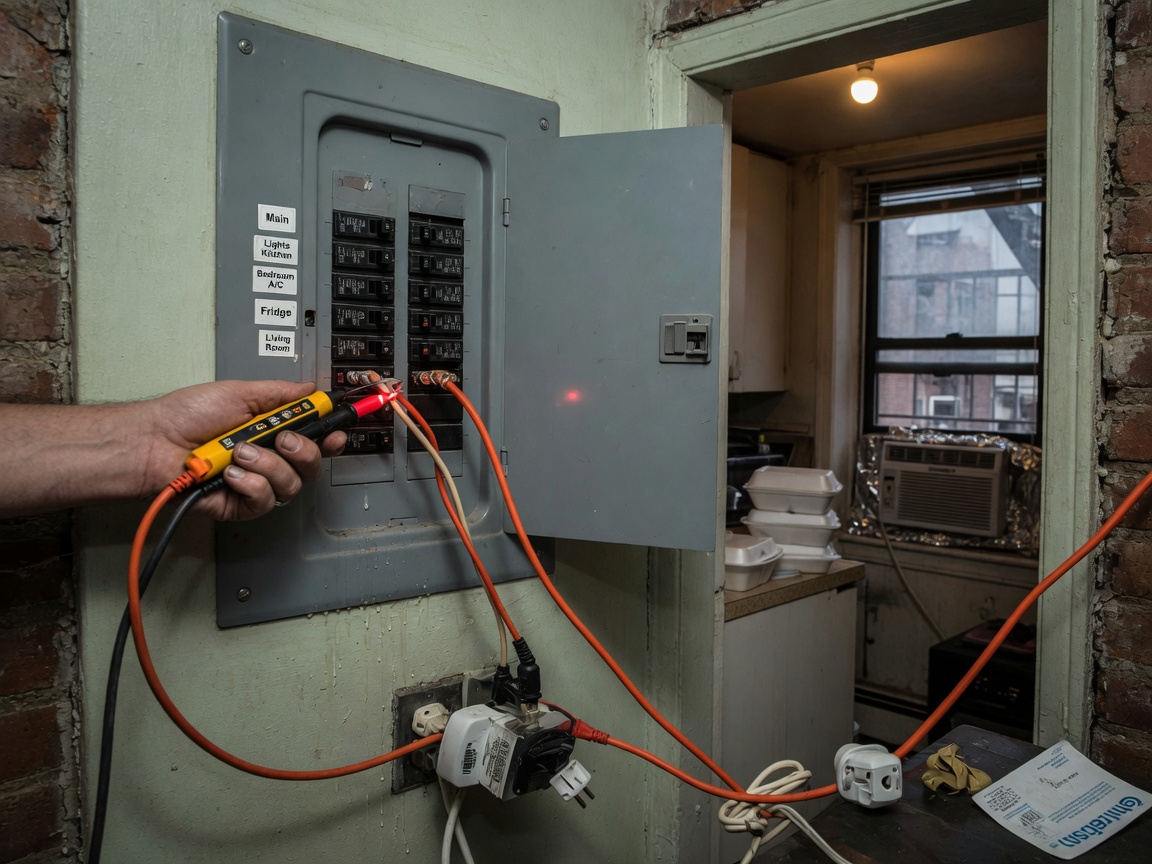
Your circuit breaker keeps tripping because of an overloaded circuit, a short circuit, or a ground fault, especially in New York City buildings constructed before 1970 where original 60-amp or 100-amp panels still serve homes now packed with air conditioners, microwaves, and chargers.
Overloaded Circuits from Summer Cooling Loads
New York City summers push window units and central systems hard, drawing 12–15 amps each on circuits originally meant for lights and radios. In Brooklyn row houses and Queens two-family homes, residents often run multiple units on the same 15-amp line, pushing totals past 20 amps within minutes. This repeated draw heats the breaker strip until the thermal mechanism trips. Adding a dedicated 20-amp circuit for each major unit prevents the cycle. Homeowners in Manhattan pre-war apartments notice the same pattern when portable units share outlets with refrigerators. Checking the panel label for total amperage and spacing loads across phases reduces nuisance trips without replacing the entire service.
Short Circuits in Pre-War Knob-and-Tube Wiring
Many buildings in the Bronx and parts of Staten Island still contain knob-and-tube runs installed in the 1920s and 1930s. The rubber insulation cracks after decades of heat cycling, allowing hot and neutral wires to touch inside walls. A single nail driven during a renovation can also pierce both conductors and create an immediate short. When that happens the breaker opens in under a second to stop arcing. Replacing the affected run with modern NM cable on a new 20-amp breaker eliminates the fault. Electricians serving New York City routinely find these hidden shorts during outlet repairs when homeowners report trips limited to one room.
Ground Faults Triggered by Moisture and Salt Air
Coastal humidity and winter road salt accelerate corrosion on outdoor receptacles and basement wiring in neighborhoods near the East River and Jamaica Bay. When moisture reaches a damaged cord or outlet box, current leaks to ground and the breaker’s sensing coil trips. This pattern appears most often on garage and patio circuits after heavy rain. Installing GFCI protection on those lines meets current code and stops repeated trips. In older Hempstead and North Hempstead homes, buried service entrances exposed to groundwater produce the same symptom until the cable is replaced.
When the Panel Itself Has Reached Its Limit
Panels rated at 100 amps or less cannot safely support the combined draw of electric ranges, dryers, and EV chargers now common in New York City households. The main breaker trips first when total load exceeds its rating, usually during evening hours when lighting, cooking, and HVAC run together. Upgrading to a 200-amp panel with new breakers redistributes loads and adds headroom. Homeowners in Yonkers and Mount Vernon often combine this upgrade with service entrance conductor replacement to meet utility requirements.
Practical Next Steps for Persistent Trips
Start by noting which rooms or appliances cause the trip, then unplug everything on that circuit and reset the breaker. If it holds with nothing connected, the issue is overload; if it trips immediately, a short or ground fault exists. For repeated events across multiple circuits, schedule circuit breaker repair in New York City through a 24/7 service. Readers can also review common electrical emergencies in New York homes and learn the differences between 24/7 electricians and regular electricians to decide on timing. When the panel shows signs of heat or burning odor, an electrical panel upgrade becomes the permanent fix rather than repeated resets.